
Homeowner Guide
Shaftless Elevator: How It Works, Space Needs and Limits
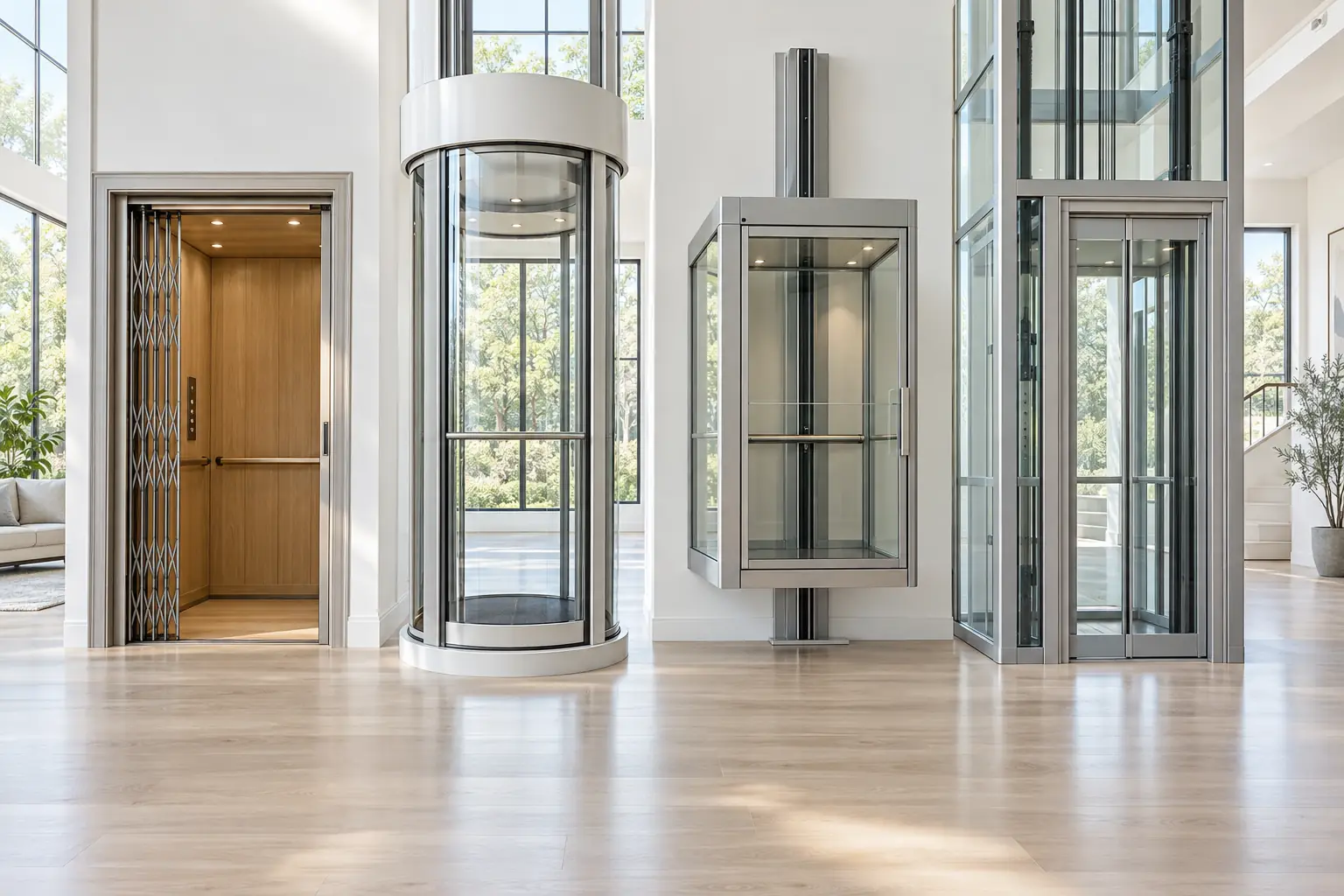
A shaftless elevator is a home lift that rides on two self-supporting rails and passes through a cut-out in the floor, so no shaft, pit or machine room is built. A drive in the car roof pulls it up. Most serve two floors, carry 375 to 845 lb, plug into a dedicated outlet, and move slower than traditional elevators.
A shaftless elevator is a small home lift that rides up and down on its own rails and passes through a hole cut in the floor, so no shaft, pit or machine room has to be built. The motor sits in the car roof or the rails, it usually plugs into a household outlet, and most models serve two floors.
That design makes it the easiest elevator to retrofit into an existing house. It also brings real limits on weight, stops and speed. This guide explains each one with numbers from manufacturer spec sheets, including the cut-out size most guides leave out.
How does a shaftless elevator work?
A shaftless elevator (also called a through-floor lift) is a self-supporting car on two vertical rails. The rails bear the load, so the lift does not need a hoistway, which is the enclosed shaft a traditional elevator travels in.
Here is the basic sequence:
- The car sits on the lower floor in a corner, a closet or a stairwell void.
- A drive in the car roof winds a rope or belt that pulls the car up the rails. Stiltz describes its drive as a self-contained rope drum with a braked gear motor enclosed in the car roof. Savaria's Luma uses a winding drum drive.
- The car rises through a cut-out in the ceiling and floor above. When the car is upstairs, its base fills the hole. When it is downstairs, a lid or floor plug on the car roof closes the opening, so the upper floor stays walkable.
- Controls are simple. Many models use press-and-hold buttons. Savaria says its through-floor lifts use constant-pressure controls: the car moves while you hold the button and stops when you let go. Stiltz adds remote controls so the car can be called from either floor.
Some through-floor units use air instead of a motor. Those are pneumatic (vacuum) elevators, which move a sealed tube car with air pressure. They are covered in our guide to the six home elevator drive types.
How much space does a shaftless elevator need?
The footprint is small, but the hole in the floor is the number that matters most. Spec sheets list it, and most cost guides skip it. Here are published figures for three common models.
| Model | Floor cut-out | Min. upper ceiling height | Max. load | Max. travel |
|---|---|---|---|---|
| Stiltz Duo Alta | 41 1/4 in x 31 7/8 in | 86 5/8 in | 375 lb (2 people) | Two floors, 14 ft 9 in |
| Stiltz Trio Alta | 50 3/8 in x 41 1/4 in | 96 in | 550 lb | Up to three floors, 19 ft 8 in |
| Savaria Luma | About 38 in x 47 in footprint | Not listed | 500 lb (Luma L) | Two stops |
Sources: Stiltz Duo Alta spec sheet, Stiltz Trio Alta US spec sheet, Savaria through-floor lifts. Manufacturers say these dimensions are for guidance only, so a site survey sets the final numbers.
Two space checks people often miss:
- What is above the hole. Joists, ductwork, plumbing and wiring in the ceiling can block the best spot. Rerouting them adds cost.
- Upstairs ceiling height. The car has to fit under the upper ceiling when it arrives. A room with a low or sloped ceiling may need a different spot or a shorter car.
What power does a shaftless elevator need?
Most shaftless lifts run on a plug-in electric drive, not hydraulics. Stiltz lists a 220 to 240-volt, 10 to 20-amp socket for its US models. Standard US wall outlets are 120 volts, so many homes will need an electrician to add a dedicated 240-volt outlet near the lift. HomeGuide puts a dedicated circuit at $250 to $900, and a panel upgrade, if your panel is full, at $1,300 to $4,000.
Power cuts are handled by a battery. Stiltz says a battery backup lowers the car to the ground floor if the power fails. Ask any brand you are considering where the car goes in an outage and how long the battery lasts.
What are the limits of a shaftless elevator?
Shaftless lifts trade capacity and range for easy installation. Know these limits before you get quotes:
- Stops. Savaria says through-floor lifts are limited to two stops "as required by code", while elevators with a hoistway can serve up to six. Stiltz sells a three-floor Trio model. Which one your town allows depends on local code, and rules vary by state.
- Weight. Loads run from 375 lb on a Stiltz Duo to 500 lb on a Savaria Telecab or Luma L. Savaria's larger Telecab 17 is rated for 845 lb. A load sensor stops the car if the limit is exceeded.
- Speed. Stiltz lists a nominal speed of 3 15/16 inches per second. By our estimate, that is roughly 30 seconds for a 10-foot ride, slower than a traditional elevator.
- Wheelchair fit. Smaller two-person cars may not fit a wheelchair plus a second rider. Stiltz says its larger Trio fits a full-sized wheelchair. Check the internal car size and door width against your own needs.
- Indoor use. These lifts are built for indoor rooms. Outdoor or garage-to-deck access usually calls for a different product.
Angi's overview lists the same trade-off: shaftless models are easy to retrofit and have a small footprint, but they are generally limited to two floors.
Is a shaftless elevator safe?
Modern shaftless lifts include several standard safety features. On Stiltz models, the spec sheet lists a light curtain that stops the car if something crosses the doorway, sensors on the top and bottom of the car that stop it when they touch an obstruction, a door that must be closed before the car moves, a built-in brake, a load sensor and battery lowering.
The sensors under the car matter because the space below a rising car is open floor. Keep that area clear of pets, toys and furniture.
In most states, a residential lift also needs a permit and an inspection, and some states inspect yearly. HomeGuide puts permits at $300 to $2,000 and inspections at $150 to $700. Rules vary by state, so call your local building or elevator inspection office early.
How much does a shaftless elevator cost?
Published ranges differ because some include the floor cut-out, electrical work and finishing, and others quote the unit alone.
| Source | Shaftless price range |
|---|---|
| Angi / HomeAdvisor type ranges | $15,000 to $25,000 |
| Retirement Living (Stiltz) | $20,000 to $35,000 |
| Savaria (two-stop through-floor, installed) | $30,000 to $40,000 |
| HomeGuide 2026 main guide (installed) | $30,000 to $50,000 |
| HomeGuide shaftless cost page (average) | $40,000 to $75,000 |
For a full breakdown of what drives the total, see our 2026 home elevator price guide and our page on installation costs.
Shaftless elevator vs traditional elevator: which fits your home?
| Factor | Shaftless (through-floor) | Traditional (hoistway) |
|---|---|---|
| Construction | Floor cut-out, no shaft or pit | Shaft, often a pit, sometimes a machine room |
| Floors served | Usually two | Up to six stops (Savaria) |
| Capacity | 375 to 845 lb | Usually higher; varies by model |
| Speed | Slow | Faster |
| Best fit | Existing two-story homes, tight spaces | New builds, three or more floors, larger cars |
If you only need to connect two floors and want the least construction, a shaftless model is usually the first option to price. If you need more floors, a larger car or faster rides, compare hydraulic and traction designs too.
Next step: get a site survey and a local price
The only way to confirm a shaftless elevator fits is a site visit. An installer checks the joists above the planned spot, the ceiling height upstairs and your electrical panel, then quotes the full job, including permits. Ask for two or three written quotes so you can compare the same scope. You can get a local price from a vetted installer in your area.
Frequently asked questions
Can a shaftless elevator go to three floors?
Most cannot. Savaria says its through-floor lifts are limited to two stops as required by code, while Stiltz sells a three-floor Trio model with up to 19 feet 8 inches of travel. Whether a three-stop shaftless lift is allowed in your home depends on your local building code, so check with your local elevator inspection office before you buy.
How big is the hole for a shaftless elevator?
It depends on the model. The Stiltz Duo Alta spec sheet lists a floor cut-out of 41 1/4 by 31 7/8 inches, and the larger Trio Alta needs 50 3/8 by 41 1/4 inches. Manufacturers say these figures are guidance only, so an installer confirms the exact size during a site survey.
Does a shaftless elevator need a special outlet?
Often, yes. Stiltz lists a 220 to 240-volt, 10 to 20-amp socket for its US models, and standard US wall outlets are 120 volts. Many homes need an electrician to add a dedicated circuit, which HomeGuide prices at $250 to $900. Ask each installer to include this in the quote.
What happens to a shaftless elevator in a power cut?
Many models carry a backup battery. Stiltz says its battery returns the car to the ground floor if the power fails, and the car stays there until power comes back. Battery behavior differs by brand, so ask each installer how their model handles an outage and how often the battery should be replaced.
How long does it take to install a shaftless elevator?
Stiltz says a standard installation of its modular lift takes one day. That figure covers fitting the lift itself. Permits, cutting and finishing the floor opening, electrical work and the final inspection add time, so plan for the whole project to take longer than install day. Your installer can give you a realistic schedule.

Get prices from a vetted local installer
Tell us about your home. We connect you with one licensed home elevator or stair lift installer in your area. No spam, no call centers.