
Homeowner Guide
What Is a Home Elevator? Types, Space Needs and Who They Suit
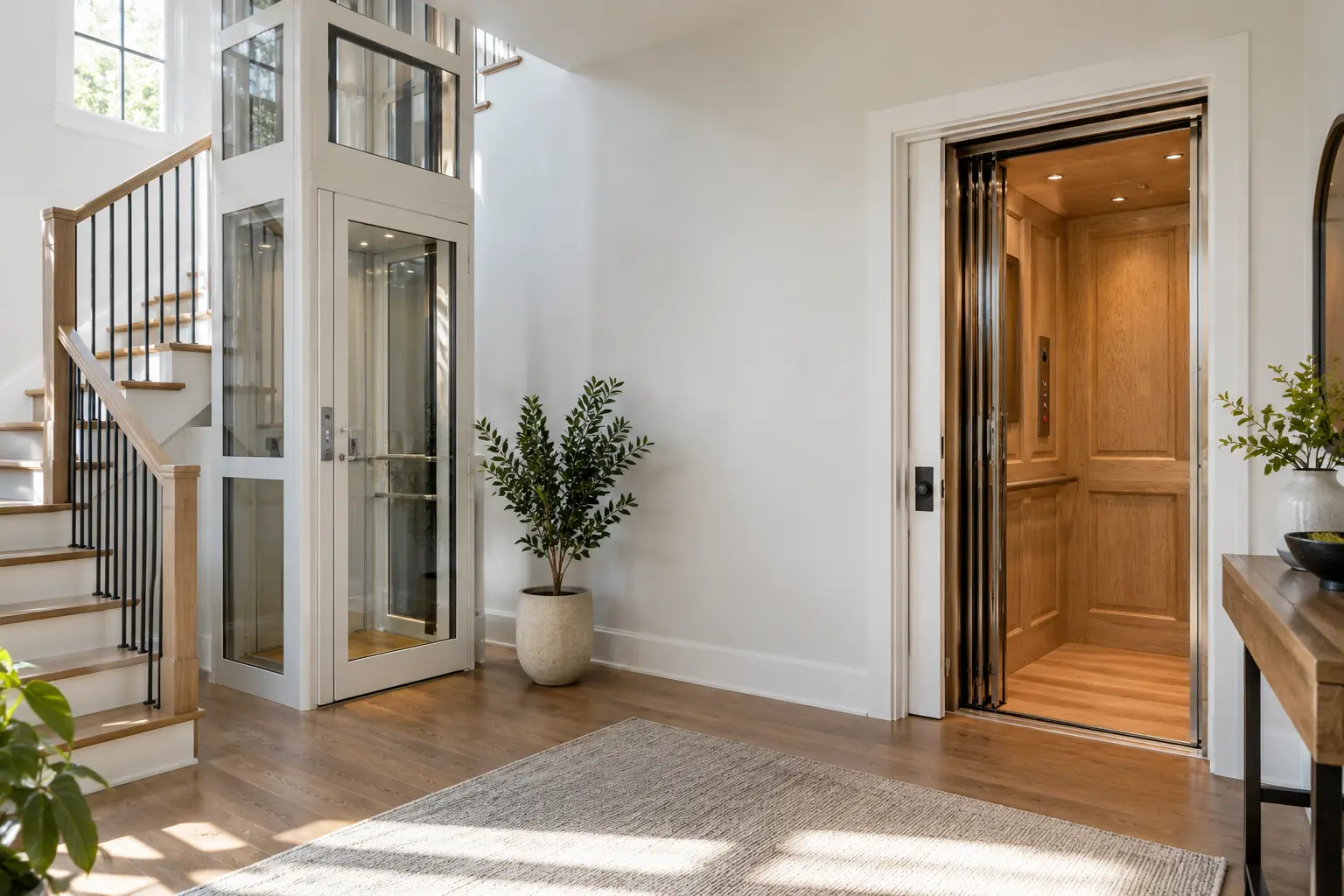
A home elevator is a small passenger lift built for a private house, usually carrying two or three people between two to four floors. The main types are hydraulic, cable or traction, winding drum, pneumatic vacuum and shaftless through-floor models. They differ mostly in how much space and construction work they need, and that is what drives price.
A home elevator is a passenger lift designed for a single-family house rather than a commercial building. It moves slowly compared with an office elevator, carries a smaller load, and in the US it is built to a separate part of the national elevator safety code written for private residences. Most people who look into one are planning to stay in a two- or three-story home for the long run, or are helping a parent do the same.
This guide explains the main types, how much room each one needs, which rules apply, and the questions to settle before you ask anyone for a quote.
How a home elevator differs from a stair lift
A stair lift is a seat that rides a rail fixed to your staircase. A home elevator is an enclosed or semi-enclosed car that travels vertically between floors, through its own shaft or through an opening cut in the floor. The practical differences:
- Who can use it. A stair lift needs the rider to sit and transfer into a seat. Many home elevators take a standing adult, a second person and, in larger cabs, a wheelchair.
- The staircase. A stair lift stays on the stairs. An elevator leaves the stairs free for everyone else.
- Construction. A straight stair lift can often be fitted in a day. An elevator needs a site survey, usually a permit, and some building work.
- Cost. Elevators cost many times more. Our 2026 cost guide breaks the numbers down by type.
The five main types of home elevator
1. Hydraulic
A pump pushes fluid into a piston that raises the car. Hydraulic elevators are smooth and can carry heavier loads, which makes them common in larger homes and for wheelchair use. They need a hoistway (shaft), usually a shallow pit, and space nearby for the pump and controls.
2. Cable or traction
The car hangs from cables or belts driven by a motor and counterweight. Many newer traction designs are "machine-room-less", meaning the motor sits inside the shaft, which saves space. They still need a shaft.
3. Winding drum
Cables wind around a drum, much like a winch. This is an older design that still appears in some models. It needs a shaft and usually a separate machine space.
4. Pneumatic vacuum
A clear tube with a car inside, moved by changes in air pressure above it. These need no pit and no machine room, and the round glass tube can sit almost anywhere. The trade-offs are a smaller cab, more operating noise than a hydraulic unit, and limited weight capacity.
5. Shaftless or through-floor
A compact car rides on rails attached to a wall and passes through a hole cut in the ceiling above. When it is downstairs, a panel on top of the car closes the opening. Searches for shaftless models have risen sharply, and Google Trends shows "shaftless home elevator cost" and "small home elevator cost" among the fastest-rising elevator searches in the US. They suit two-story homes and existing houses where building a full shaft would be hard.
| Type | Needs a shaft | Needs a pit | Typical fit |
|---|---|---|---|
| Hydraulic | Yes | Usually shallow | Larger homes, wheelchairs, heavier loads |
| Cable / traction | Yes | Usually shallow | New builds and full remodels |
| Winding drum | Yes | Varies | Older or budget designs |
| Pneumatic vacuum | No | No | Existing homes, open-plan spaces |
| Shaftless / through-floor | No | No | Two-story existing homes |
How much space does a home elevator need?
Space depends on the type and the cab size. As a rough guide, many shaftless and through-floor models need a footprint of about 5 by 4 feet, while a traditional shafted elevator that takes a wheelchair needs a larger hoistway plus room for doors to open. Ask each installer for the exact hoistway, pit and overhead dimensions of the model they quote, because these vary by manufacturer.
Common places to fit one:
- Stacked closets. A closet on the ground floor directly below a closet upstairs is the classic retrofit spot.
- A corner of a large room, especially for glass pneumatic tubes or shaftless models.
- An exterior shaft attached to the side of the house, which avoids losing interior space.
- A garage, giving step-free access from the car to the main floor.
If you are building a new home, you can plan "elevator-ready" stacked closets now and add the elevator later.
Source: Angi and HomeAdvisor cost guides (2026). Other published ranges run higher, especially for shaftless units (Savaria: $30,000 to $40,000 for a two-stop install; HomeGuide: $40,000 to $75,000 average), because some figures include construction work.
Show the data as a table
| Elevator type | Typical installed range |
|---|---|
| Shaftless / through-floor | $15,000 to $25,000 |
| Hydraulic | $25,000 to $50,000 |
| Pneumatic vacuum | $35,000 to $60,000 |
What rules apply?
In the US, residential elevators are covered by ASME A17.1, the national safety code for elevators, which has a section written for private residences. States and cities adopt it on their own schedules and add their own rules, so permits and inspections vary by location.
One change matters a great deal to families with young children. The 2016 edition of ASME A17.1 cut the maximum gap between the elevator's car door and the hoistway door from five inches to four, and added rules on how rigid doors and gates must be. Regulators changed it because a small child could stand in the old gap with the door closed; Washington State's labor department and the US Consumer Product Safety Commission have both warned about entrapment in that space. If you are buying a used elevator or living with an older one, ask an installer to check the gap or fit a space guard.
Who usually buys a home elevator?
Most buyers fall into a few groups:
- Homeowners planning to stay put for many years who want every floor usable later in life.
- Adult children arranging help for a parent who lives with them or nearby.
- Owners of raised coastal homes, where the living space sits a full story or more above the garage to meet flood rules.
- Families who move heavy items between floors often, or who simply want the convenience.
AARP surveys have long found that most adults over 50 want to stay in their homes as they age, and the 2026 Home Improvement Research Institute aging-in-place study found that 28% of households with older adults reported difficulty using some part of their home. Stairs are often the first obstacle.
Questions to answer before you get quotes
- Which floors must it connect, including a basement or garage level?
- Will anyone need to use it with a wheelchair or walker? That sets the minimum cab size.
- Where could it go: stacked closets, a room corner, outside the house?
- Is this a new build, a remodel or a retrofit into a finished home?
- What is your rough budget, and would a stair lift or platform lift meet the need for less?
- How soon do you need it? Custom shafts and permits take weeks to months.
Is a home elevator right for you?
A home elevator makes the most sense when you plan to stay in a multi-story home for years, when more than one person will use it, or when a wheelchair needs to reach the upper floors. If the need is one person climbing one straight flight, a stair lift may cost far less. If the main issue is a few porch steps, a vertical platform lift is often the better fit.
For a deeper look at how each drive works, read our comparison of the six types of home elevators. The next step is understanding prices. Read the home elevator cost guide and the installation cost breakdown, then use the form below to get prices from a licensed installer near you.
Frequently asked questions
How much does a home elevator cost?
Installed prices commonly run from about $15,000 to $25,000 for small shaftless units at the low end to $35,000 to $60,000 or more for pneumatic and full shafted elevators, depending on the source and the scope of construction. Local quotes vary with floors served, cab size and building work.
Can you put an elevator in an existing house?
Yes. Common retrofit options are stacked closets, a shaftless through-floor model, a pneumatic tube in a room corner, or an exterior shaft attached to the house. A site survey confirms what fits.
Do home elevators need a permit?
In most US states and cities, yes. Residential elevators follow the ASME A17.1 code as adopted locally, and most areas require a permit and an inspection. The installer usually handles both.
What is the difference between a home elevator and a stair lift?
A stair lift is a seat on a rail along your staircase. A home elevator is a car that travels vertically between floors, can carry more than one person, and in larger models takes a wheelchair.
Are home elevators safe for children?
Modern units built to the 2016 or later ASME A17.1 edition limit the gap between the car door and hoistway door to four inches. Older elevators may need a space guard or door upgrade; ask an installer to check.

Get prices from a vetted local installer
Tell us about your home. We connect you with one licensed home elevator or stair lift installer in your area. No spam, no call centers.